Making Music Matters by Admin

June 21st is the National Make Music Day. This day was initiated to motivate us to create our own euphonious melody.

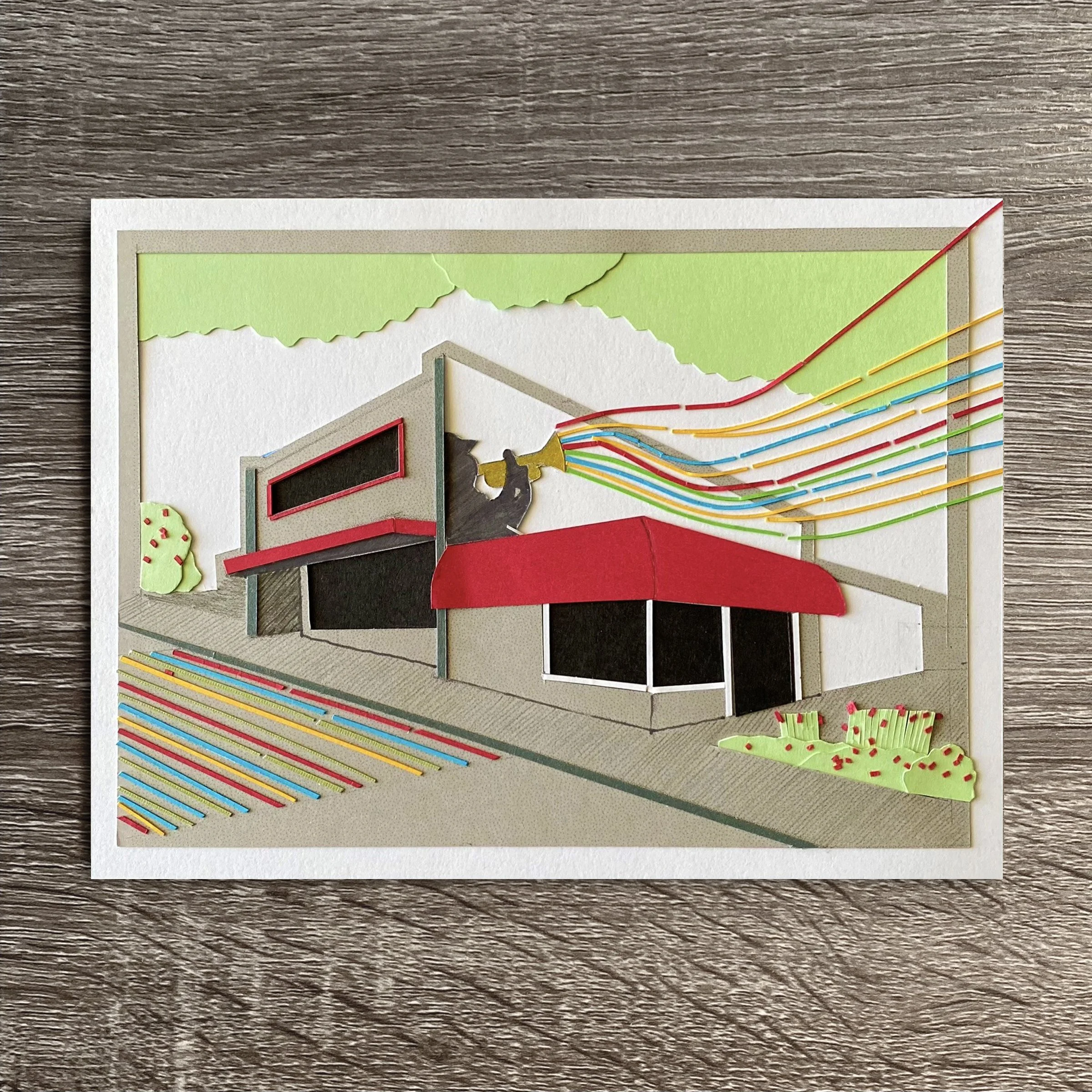
While searching for suitable music for our cards collection, we discovered a music store in the neighborhood. Within less than a quarter mile from our community metro station, Chuck Levin’s Music Center’s vibrant and eclectic facade catches our eye. The music center was first founded back in 1958. After the riots in Washington, DC, the store relocated to its current location.

A bright-red marquee across the building highlighted its uniqueness on the street; the extended canopy provides pedestrians a temporary refugee space on a rainy day. The full-height windows cover more than 60 percent of their storefront with a telling story. With its other artisan mural facing the neighbor’s property, this two-story store gave us a reason to slow down our pace. Walking on this barrier-free sidewalk has become a daily pleasure.

Chuck Levin’s visually pleasing storefront reminded us of a sustainable design principle.

“ To improve public health by providing a safe, appealing and comfortable street environment that encourages daily physical activities and avoids pedestrian injuries.” — LEED Neighborhood Development, Walkable Street.

On this momentous day, we design this card for those music lovers at Chuck Levin Music Center. Whether they are store staff, long-time customers, or instrument shoppers, we thank their support for the music center so that everyone can enjoy Levin’s unique storefront and comfortable sidewalks.

Safety Matters by Admin

Three years ago, a group wore orange shirts marching for Gun Violence Prevention in Newtown, Connecticut. Their enthusiasm reminded us that June is National Safety Month.

National Safety Month was initiated to raise awareness of many environmental safety aspects: from a trip hazards to detrimental gun violence. While government regulations and laws, such as American Disability Act, have helped prevent risks from the built environment; there are other safety issues, such as violence derived from mental illness, that might still need our attention.

According to National Alliance on Mental Illness, one in five adults in the United States experiences mental illness in a year. Less than half of them receive mental-related care. Though this seems to be such a big issue that no individual can handle, we realized WELL has developed a feasible framework for building a culture of health and establishing social ties.

“The WELL Community concept promotes the implementation of design, policy, and operations strategies that focus on addressing health disparities and promoting social diversity and inclusion.” — WELL, Community overview.

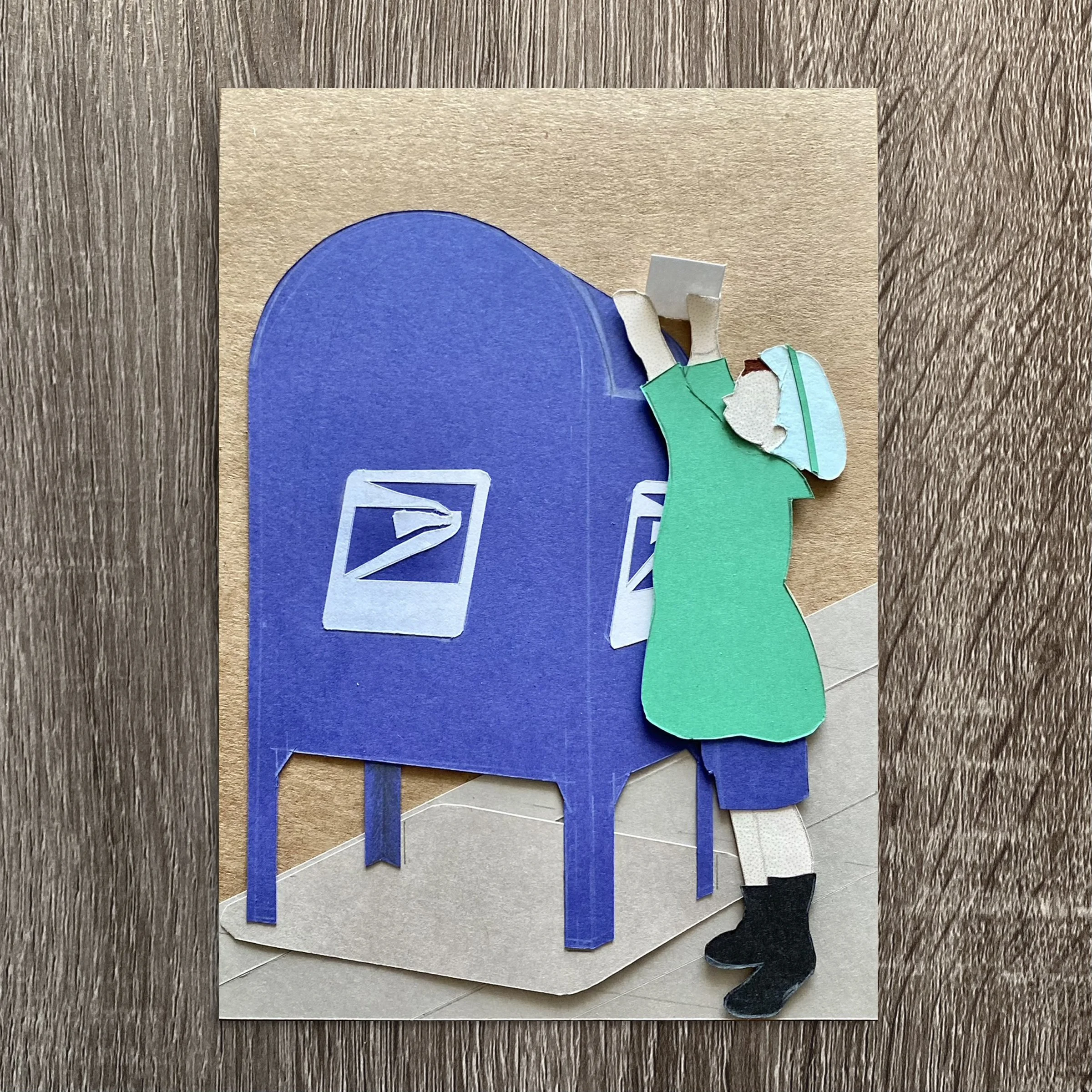
On this historic month, we design this card for enthusiastic spirits. Thanks to them for marching for safety.

Greeting Cards Matters by Admin

In the digital-production-flooded era, sending greeting cards to friends seem particularly meaningful.

When talking about greeting cards, we immediately thought of Joyce Hall. Joyce Hall, the founder of Hallmark, opened up the trend of sending greeting cards across America.

In 1910, Joyce Hall founded his card business in Kansas City. Moreover, he turned his attention to the decaying urban neighborhood upon his retirement. He developed the Crown Center, the 85-acre mixed-used development at the heart of Kansas City. Within only a 1/4 mile from the Kansas City Station, the Crown Center turned abandoned warehouse and empty parking spaces into a convenient and lively neighborhood. Visitors and residents can dine, shop, and find everything needed in this center.

While reading Joyce Hall’s fascinating story, a sustainable principle came to minds.

“Locate the project on a site that is in proximity to basic services so that at least one entrance to the project is within a 0.5-mile walking distance of at least seven publicly available basic services.” — SITES, Site Context 1.6 Locate Projects within Existing Developed Area

“What are the basic services?” you might ask. There are four major categories of essential services:

  • Food Retail, such as grocers or supermarkets;

  • Community-serving retail, such as hardware stores or pharmacies;

  • Service-based businesses, such as banks, salons, or cafes;

  • Civic and community facilities include schools, post offices, or libraries.

On this momentous day, we design this card for planners and developers. Thanks to them utilizing sustainable priciples, so that everyone could benefit from a convenient neighborhood.


By the way…If you like this short story, you might also like: Does Zip Code Impact Our Life Expectancy?

Tobacco Free Matters by Admin

Tobacco used to be sold in the pharmacy in the old days. Smoking cigars or cigarettes was socially appropriate and considered a way to reduce stress and anxiety.

In 1900, cigarette consumption was approximately 54 per capita annually. That number increased exponentially and peaked at 4,345 in 1963, almost equivalent to 12 cigarettes per day.

In 1930, the death rate of lung cancer was 4.9 per 100,000; in 1990, the rate increased to 75.6 per 100,000. Medical studies also found a direct link between tobacco consumption with other diseases and conditions such as heart disease, atherosclerotic peripheral vascular disease, laryngeal cancer, oral cancer, or decreased pulmonary function.

During the later part of the 20th century, the health burden from exposure to environmental tobacco smoke was also documented. With the increased health adversity from smoking tobacco, the World Health Organization (WHO) established the Tobacco-free Initiative. This WHO effort to promote global cooperation on aspects of tobacco control reminded us of a WELL feature.

“In order to prevent intrusion of cigarette smoke from the outdoors, projects must also take steps to ensure that smoking is not allowed in the vicinity of building entrance, operable windows and building air intake.” — WELL A02, Smoke Free Environment

Today, we design this card for former smokers, thanks to them for being so strong and courageous so we all can enjoy a smoke-free environment.


By the way, if you are interested in this topic, consider checking out “Tobacco Use: United States, 1900–1999” at NIH’s National Library of Medicine.

Blueberry Matters by Admin

Each year in mid-July, our state has a community blueberry festival. That reminds us that July is the blueberry month. It is the best time of the year to harvest blueberries in Northern America.

Blueberries are usually grown from April to September across several colder planting zones. This tiny fruit is categorized by its height, the low bushes (about 1–2 feet) grows on planting zone 3 to 6, the half-high bushes (about 3–4 feet) grows on planting zone 3 to 5, and the high bushes (4–7 feet) grows on zone 4 to 7.

Blueberry is well known for its rich antioxidant content, which brings many health benefits to our bodies. Yet, only a few people know that the popularity of this tiny blue fruit is from a public-private partnership effort.


In the 1890s, Ms. Elizabeth Coleman White, a daughter of a New Jersey’s local cranberry farm, began interested in cultivating wild blueberry. Later in the 1900s, with the help of a USDA botanist Dr. Federico Coville, their blueberry production became successful and commercialized. During its first boom in 1942- 1962, blueberry cultivation spread across America and appeared in 13 states.

While fascinating in Ms. White’s inspiring story, blueberry’s rich micronutrient content and various blueberry festivals at nearby pick-your-own farms reminded us of a WELL feature.

“Strategies to increase fruit and vegetable consumption include behavioral interventions, such as increased availability and visibility of fruits and vegetables, pricing incentives to lower the cost of fruits and vegetables and promotion and support of community gardens and urban agriculture initiatives.” — WELL N01, Promote Fruit and Vegetable Visibility

On Blueberry Day, we design this card for those homemakers, thanks to them looking after homes and make fruits and vegetables so available at our kitchen tables.


By the way, if you are curious more about Ms. Elizabeth While, a webinar “Through Elizabeth’s Eyes” provided by Pinelands Commission will be a great resource to satisfy your big learning appetite.

Fitness Matters by Admin

wheaton community center MD

Today, the first Saturday of May, is National Fitness Day. Numerous activists have promoted fitness; one credited contributor was Kim Bielak, a life and career coach based in Los Angeles.

While it is essential to keep the fitness of our mind and body, counterintuitively, it is also critical for us to know that we are not aware of “doing exercise.”

Why?

From human instinct, it is a novel idea to go to a specific destination and only to build up our bodies. Looking back on our anthropology history, none of our hunter gathered ancestors’ activities was for “doing exercise.” Physical movements have already embeded in their daily routine. In the 19th century, Treadmills (tread wheels) was invented by William Cubitt for the Victorians to punish the prisoners, not to “benefit overall well-being.” Therefore, if we inject “movements” routines into our daily life, it minimizes our innate resistance to “work-out,” which makes “work-out” and “exercise” more available to us. When we realize that theory, walking would be the most basic form of physical exercise.

According to studies, the minimum recommended dose for exercise is 150 mins per week. If we keep this “150 mins-movement” habit, we will lose about 0.5 pounds (lb.) per month and can lose about 6 pounds if we continue this routine for one year. Also, because 30 percent of our muscle mass counts for 20 percent of metabolism; the older we are, the more benefit we can gain from exercise.

A study by Ralph Paffenbarger, a Stanford and Harvard University professor, found a correlation between exercise and mortality rate. Under the exact circumstances of doing 2000 kcal per week, the mortality rate drops 21 percent among the age group of fifty and less; the mortality rate drops 50 percent for the age group of seventy to eighty-four.

Interestedly, one of our neighborhood community center integrated the recreation and library program into one building. This brilliant gesture reminded us of a WELL design principle.

“Active design considers how different building components such as staircases can encourage movement.” — WELL V01, Active Buildings, and Communities.

Whether you are a fitness enthusiast or fitness cavalier, on National Fitness Day, we design this card for users at the Wheaton Community Centers, thanks to them share their healthy lifestyle with everyone in the community.


By the way, if you are interested in this topic, consider watching a Google talk by Dan Liberman, “Exercised- why something we never evolved.”