
Image powered by Unsplash
How to start an architectural elevation? During the AI-flooded age, making this 2D drawing seems like an easy skill for many people. However, for many designers, making such a functional and aesthetically pleasing surface is not an easy task. This all started with thinking about the project's building envelope. The building envelope is a complex architectural element. A well-designed envelope assembly and facade layout can help occupants live in a comfortable environment.
Before we put our ideas on paper, there are a few things we need to consider
Where is this building located? What is its climate zone?
What's the overall budget for this building?
What's the facade requirement or glazing ratio mandated in the AHJ (authority having jurisdiction)?
Is there any certification that the building wants to pursue to gain specific recognition?
What's the program of the building? Is it a one- and two-family dwelling? Is it a townhouse, or is it a multifamily and commercial building?
Why does building location and climate zone matter?
It matters because the local climate will dictate the fenestration strategy that we employ. If the building is located in a hot and arid climate, such as an adobe house in a desert, then the building should have most openings facing the inner courtyard, small punched windows at the exterior, and perhaps with an additional wind tower for passive ventilation.
If a building is located in a cold and windy climate, we could limit operable windows and create a multifaceted facade to break the wind flow. According to the IECC (International Energy Conservation Code), most of us live in the Washington Metropolitan area, which is Climate Zone 4A.
Zone 4A is a mixed-humid climate. Therefore, designers can freely experiment with different types of shades, louvers, or brise-soleil at the building exterior. Examples can be seen at the USGBC's main office on K Street or the AIA headquarters on New York Avenue in Washington, DC.
Why does a building's overall budget matter?
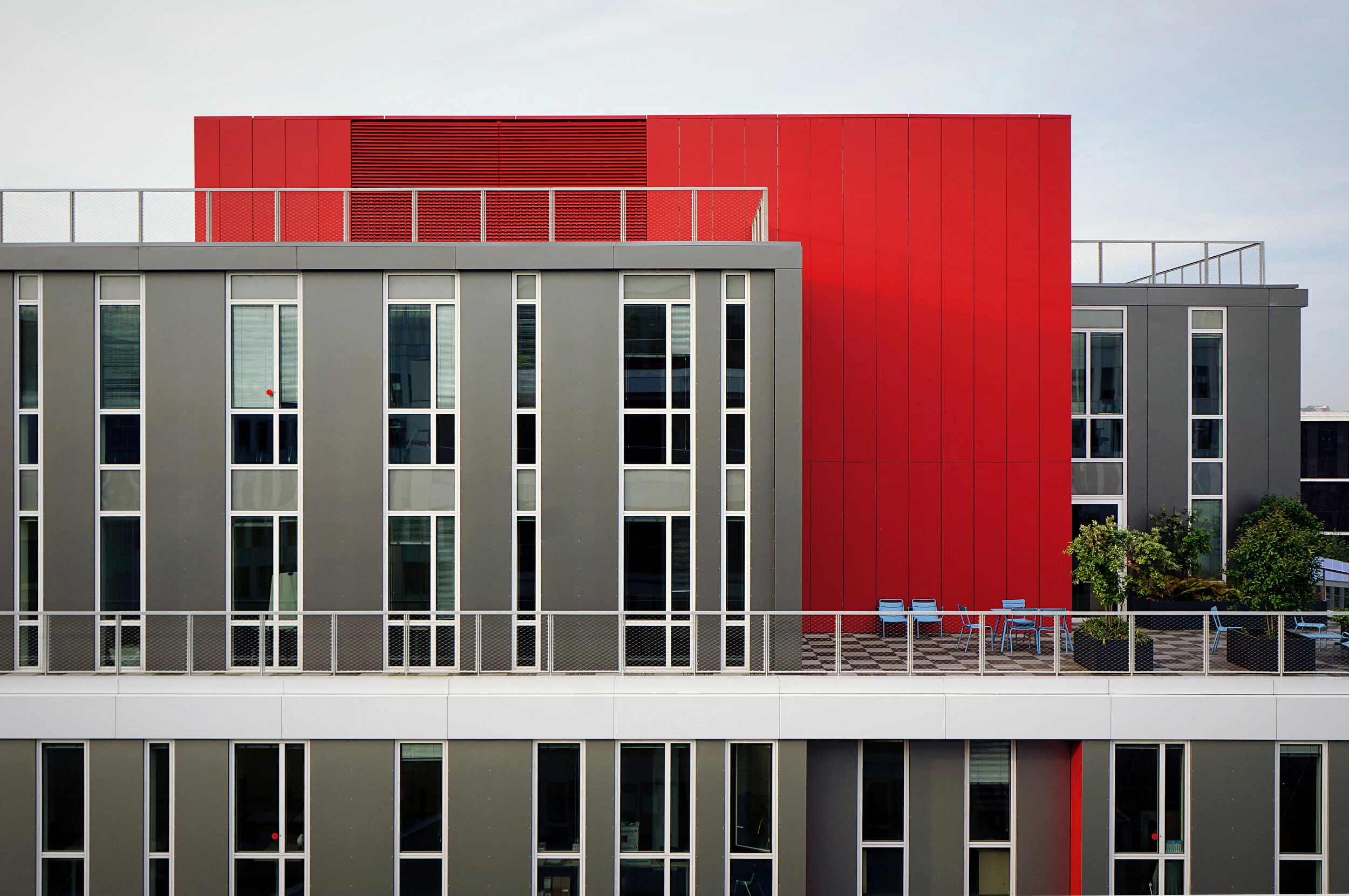
As a rule of thumb, the cost of mechanical equipment typically accounts for 25 to 35 percent of the total capital investment in new construction. Once the owner and designer have the cost allocations in mind, they would further need to decide whether the building should operate more towards a passive or an active ventilation system. This decision is easier to make in a residential project. Because most of the projects that follow IRC have a lower margin, a passive ventilation strategy would always be considered. In a new construction project, the owner and designer typically decide the building system based on its dollar amount per square foot. Once they know which system to go for, the designer will try to make the elevation based on the chosen equipment. For example, many HVAC systems require a condensing unit on the rooftop. In such a case, the designer will provide a solution on how to screen the rooftop equipment and integrate various ducts or exhaust grills at the building exterior elevation.
Why does the AHJ's facade requirement matter?
Some jurisdiction have their specific district design guidelines. The goal of such a design guideline is to enhance the neighborhood identity or harmonize the street frontage. For example, you can read similar language in one of Montgomery County's planning publications. It's stated, "...providing architectural facades and agreeing to be bound by particular elements of design, such as minimum amount of transparency, maximum separation between doors, awning provisions, sign restriction or lighting parameters that affect the perception of mass and pedestrian comfort, or enhance neighborhood compatibility." (Incentive density implementation guidelines, page 48)
Why does project recognition and specific certification matter?
Whether you are a member of USGBC, an enthusiast in a similar sustainable community, or not, it is always nice to have industry recognition for the project to gain market visibility and media attention. Owners and designers often follow a certain rating system and its guidance for their building. For example, if a project wants to pursue LEED ND recognition, the building might have a facade that meets such a requirement: "all ground-level retail, service, and trade use that face a public space have clear glass on at least 60% of their facade between 3 feet and 8 feet above grade." (NPD Credit, Walkable Streets, (f))
Or presumably your medical building project wants to pursue an accreditation in the LEED v4.1 rating system. The building would be designed to have 40% of glazing ratio. "Views must be through glass with a visible light transmittance (VLT) above 40%. If the glazing has frits, patterns, or tints, the view must be preserved.... Views must include at least one of the 1: nature, urban landmarks, or art; or objects at least 25 feet" (IEQ credit: Quality Views)
Why does the building program matter?
The building program matters because the building envelope reflects the space within.
"The space within becomes the reality of the building." ---Frank Lloyd Wright.
Ever since the steel-concrete construction was invented and the Domino House was introduced by Le Corbusier, contemporary designers thought they no longer needed to be bound by small punched windows and could design freely. That might be true for some contemporary design. Philip Johnson's glass house is an example.
However, most building owners and builders still prefer to make a cost-effective construction and modularize all the building components. Thus, harmonizing the width of the program area at the outer perimeter is one of the tasks that designers strive to achieve when designing a building's architectural elevation. You can find such thoughts in these illustrations.