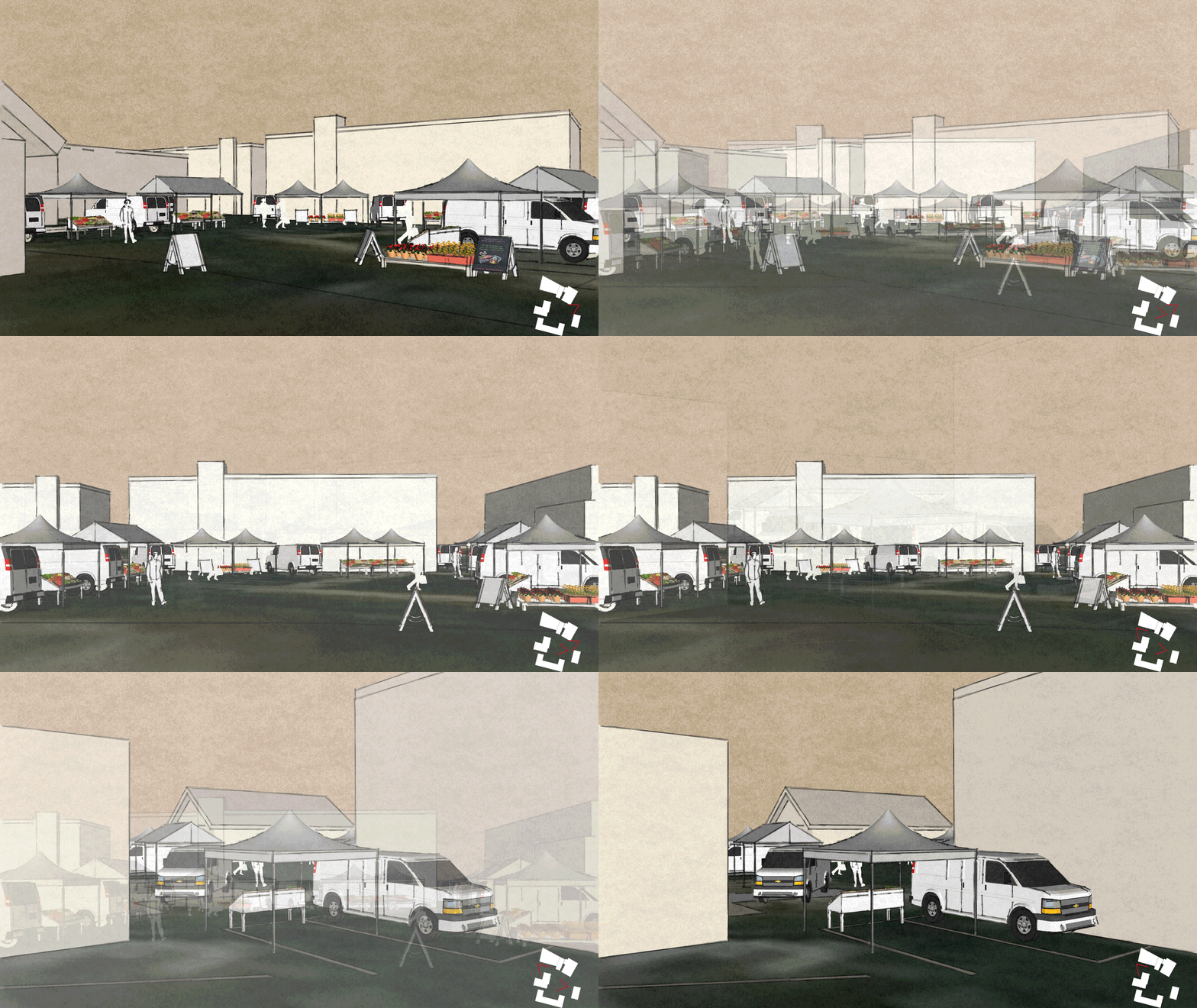
What is leftover space?
We can easily spot other leftover spaces underneath an infrastructure, between buildings or fences, with variation in size and ownership. So, what does "leftover space" exactly mean?
Leftover spaces refer to those areas that are undefined, lack an officially assigned function or program, or are often situated between stages of formal development and await future use. The term was first coined by Roger Trancik in his book “Lost Space,” which he theoretically researched on leftover space in an urban context. He considered it a “lost” space because these vacant properties had no significant outlook and harmed the built environment.
What’s different between “Leftover” and “Blight”
“Blight”, another word that often appears in urban studies and reports, also describes conditions of property that are considered detrimental to the built environment. Blight creates a negative impact on the physical, social, and economic well-being of a community. That could be an abandoned building or a vacant lot full of rubbish and garbage.
Unlike the word “blight”, leftover space is not necessarily associated with rubble, garbage, or anything dangerous to our well-being. It is often suggested as an empty property without a specific use. The downside of the leftover space was merely due to its vacant stage and lack of activities.
Why does Leftover Space matter?
It matters because the neighborhood land value will increase if we take care of those leftover spaces and give these properties a new look. It will also generate additional revenue if the planner brings a well-thought-out program along with strategic design.
Awakening Potential: Continuous vs Discontinuous
These leftover spaces are waiting to be used. Therefore, the word “reuses” in a way means adaptation and adjustment from previously neglected properties. Through urban design and visual transformation, we could bring new possibilities to the neighborhood and form connections among the communities. In this research paper, “Urban Resilience: A Study of Leftover Spaces and Play in Dense City Fabric”, the author uses four case studies, Ichigaya Fish Center, Jimbocho Booktown, Shimokitazawa Cage, and Taito Block3 in Japan, to demonstrate that the leftover space can have added value and economic impact after strategic redesign of the spaces.
These leftover spaces encompass two distinct urban potentials: one is continuous (and transitional), the other is discontinuous (and temporal). Once we captures and understands the site's distinct quality, it is easier to set design parameters and redesign the area accordingly.
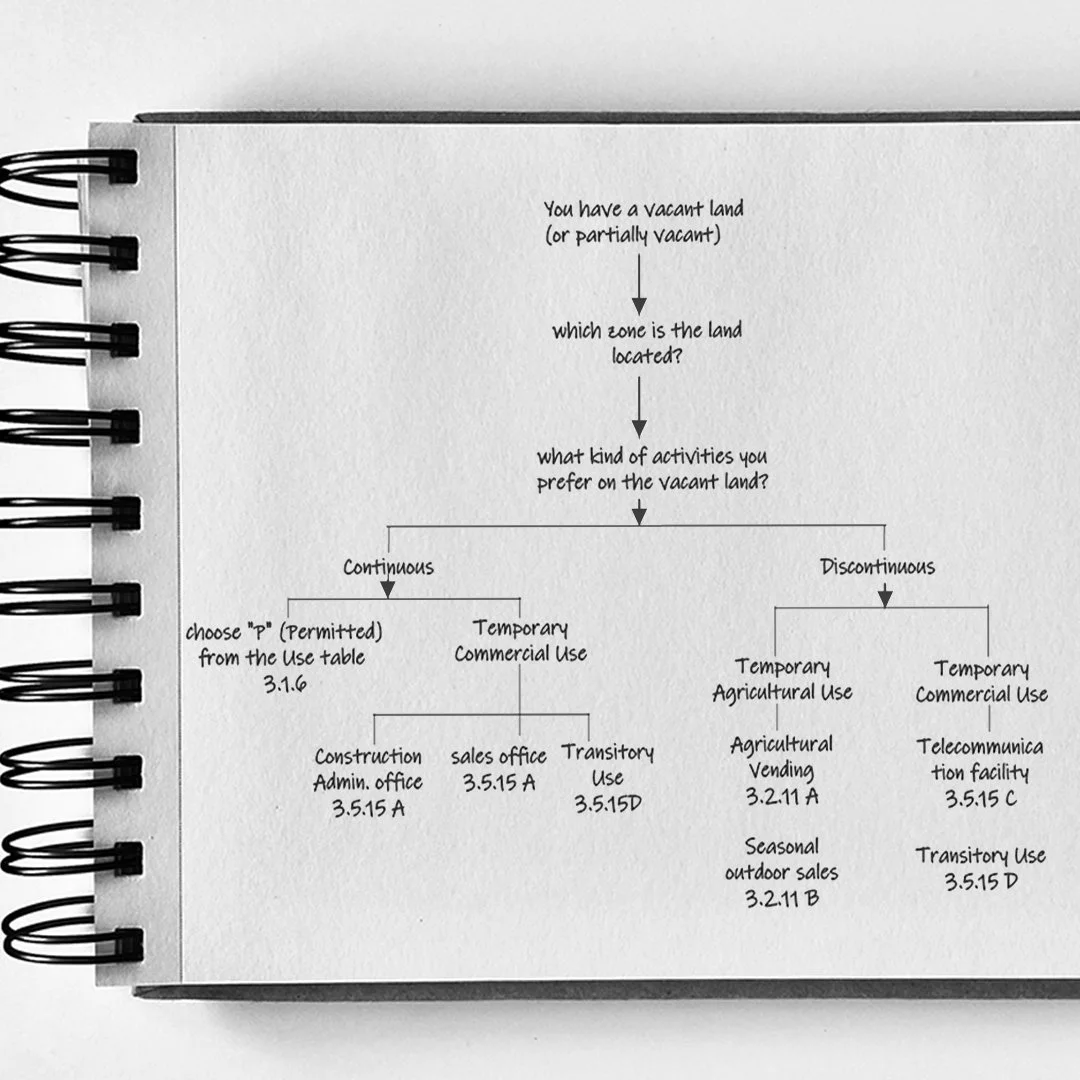
Redesign Strategies for Leftover Space
Design strategies come in two folds: one begins with the preferred program and use, the other starts with the preferred look and feel.
Design with a Program and Use
Whether you are located in a residential zone or a commercial zone, checking the use table and determining suitable uses is the critical first step for programming the property. If you are looking specifically for temporary uses, the table shows several program possibilities.The use table looks like the following:
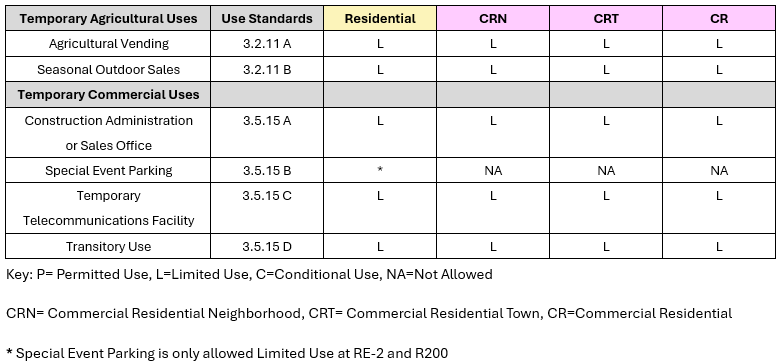
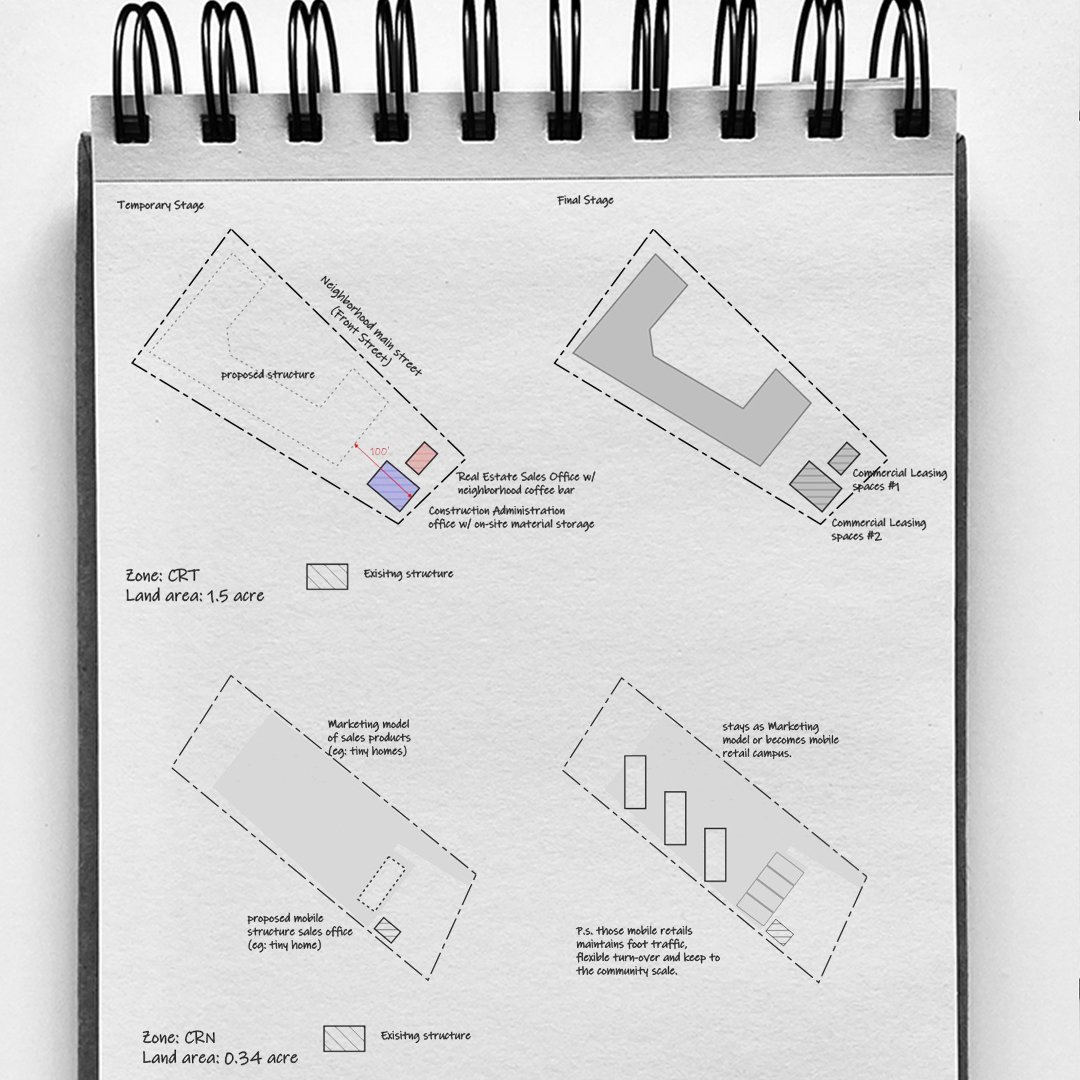
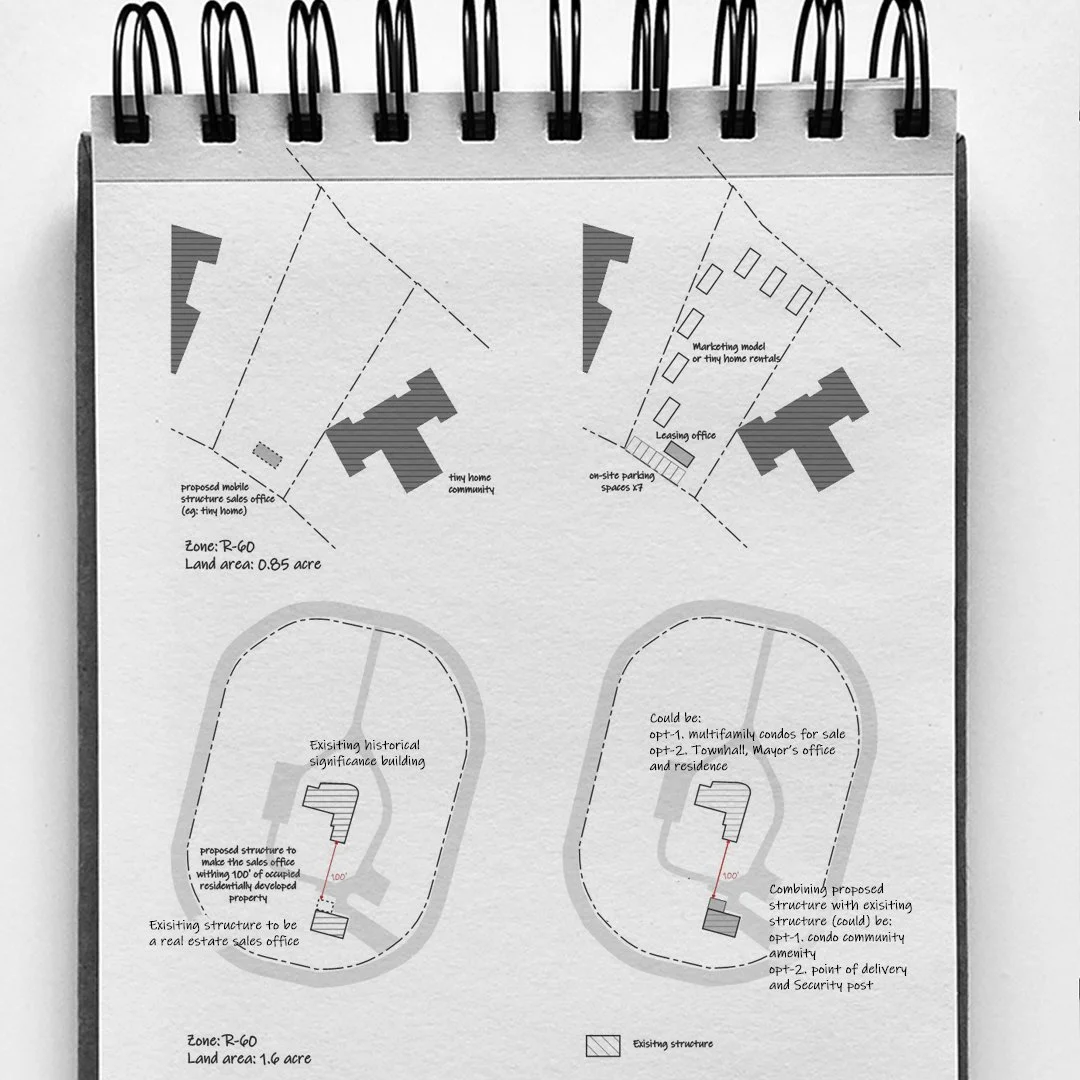
Besides selling products that require an outdoor material storage area, a conventional real estate sales office is often the first temporary structure if the land is over one acre.
This kind of sales office requires an AHJ’s (Authority Having Jurisdiction) permit. Its temporary structure can stay on-site for at least 3 years, with an incremental 2-year extension. (Per zoning ordinance 3.5.15-f).
Other than real estate sales offices, mobile structures have become an emerging trend, too. Nowadays, many tiny homes (for example, this Tumbleweed) or prefab module homes (such as Boxable) are emerging and looking to take over the market. A sales office representing those products above would be a good fit for parcels of less than one acre. Here are some examples of how to flexibly use a vacant site with temporary uses.
The ample lawn area in these zones can also be subject to “Event Parking”
Notes and References:
Covatta, A.; Ikalovi´c, V. Urban Resilience: A Study of Leftover Spaces and Play in Dense City Fabric. (Sustainability 2022, 14, 13514).
[Construction Administration or Sales Office] is particularlly refer to a temporary office for construction administration or real estate sales.These offices is required to be located within 100 feet of a occupied residentially developped property. (Per 3.5.15A)
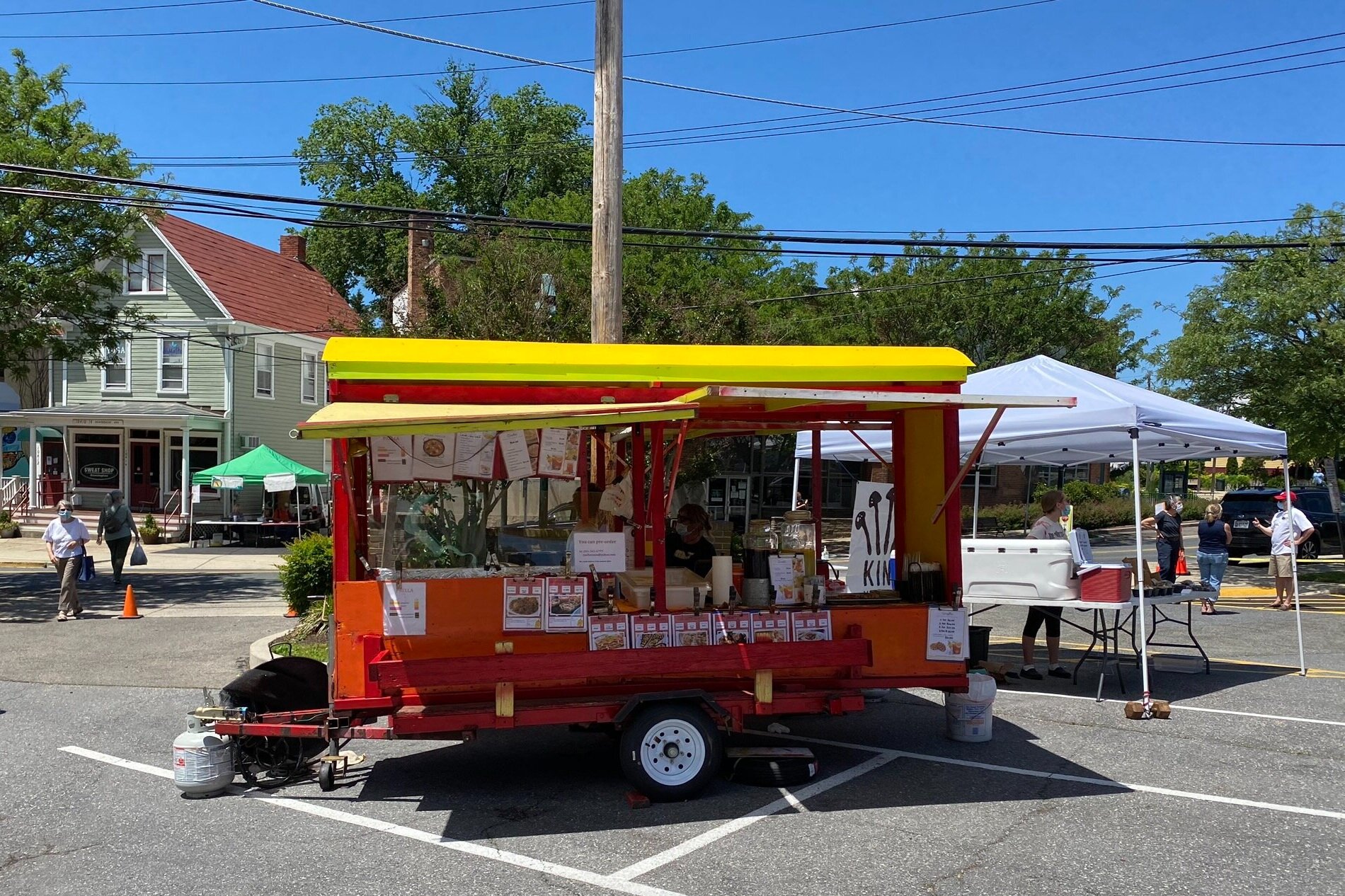
[Transitory Use] is defined as “a use on private property or the public right-of-way conducted from a vehicle or from a movable structure that remains in the same location for less than 24 hours. Transitory use includes a food service truck.(Per 3.5.15D)
You can find all above definitions at American Legal Publishing.
Curious how that tiny home community might look like? check out this video.
Comming up…