Gourmet Coffee Matters by Admin


August is the National Coffee Month, a perfect season for some novel brewing or freshly roasted beans.

We took a friend’s suggestion to taste a “gourmet coffee” at a nearby neighborhood. While immersing ourselves in this magic coffee aroma, the experience reminded us of a sustainable design principle:

“Strengthen community and encourage social connections by providing outdoor gathering spaces to support people gathering, eating, working and playing together.” — SITES-Human Health + Well-Being 6.6, Support Social Connection

That strategy might sound easier than done because shop owners often are required by the authority to control their sidewalks. Therefore, during the project’s planning phase, we need to meet with the stakeholders and potential site users to identify needs and appropriate management duties.

Many social science studies have shown that people in communities with strong social ties demonstrate greater resilience and ability to cope with changes. For example, Miami Beach has branded itself as an prosperous city with a special flavor of arts, culture, education and business to strengthen their economic resilience. Houston Street in San Antonio was activated with cafes and artisan shops to form a walkable commercial district.

Other cities, like Paris or Seattle, have been known for their coffee culture for decades. The significance of the coffee place has surpassed its unique aroma. Whether in Avenue des Champs-Elysees or Starbucks, people bond over coffee no matter where they are.

On this momentous day, we design this card for all coffee shop lovers. Thanks to their love for coffee shops, so the streets can be filled with coffee vibes, aroma and activities.

Sandwich Matters by Admin

Sandwich, one of America’s most popular menu items, is celebrated this month.

A sandwich typically consists of vegetables, cheese, slices of meat, and at least two pieces of bread. This simple and comfy food makes it a popular choice for school lunch, office brownbags, or picnics. It is also a household staple that you can find at the deli across the street or in a diner by the highway.

Who came out with the idea of making “sandwiches”? If you are curious like us. Sandwich is named after its supposed inventor, John Montagu, the 4th Earl of Sandwich. It is said John Montagu liked to order his “sandwich” during his long cribbage and other game session because that food allowed him to continue gambling while eating without needing other utensils. Then sandwiches slowly began appearing in society as a late-night meal among these aristocrats.

In the 19th century, when the rising industrial society took off, the sandwich became popular among the working classes. People like to consume sandwiches because they are fast, portable, and fairly inexpensive.

In America, sandwiches became the standard menu item during the first diner boom. Those diners typically serve casual American cuisine such as hamburgers, fries, pancakes, or sandwiches. From 1920 to 1940, those diners were commonly known as the “lunch cars” because many were refurbished from a retired train or trolley. After World War II, as the economy returned to civilian productions and many people drove across towns, diner became popular and frequently stayed open 24 hours a day. Sandwiches offered at the diner were no longer linked to a specific meal schedule but rather a comfy food always available.


The sandwich was created while its inventor focused on something else. Ironically, as our lifestyle evolves, we now have an elaborate club sandwich with fries and a milkshake as we desire. We can also eat alone or attentively with our friends or family in most diners.

Reading the sandwich’s interesting gastronomy, which surprisingly tied to the progression of our built environment, reminded us of a WELL feature.

“In addition to eating and space, having designated meal periods can help ensure individuals have and take time to eat mindfully.” — WELL N08, Mindful Eating

On the Sandwich Day, we design this card for sandwich maker, thanks to them for preparing the meal and space so we all can eat mindfully.


By the way, if you are interested in seeing how the beauty of quintessential diners was recorded in history, visit “Nighthawks” (1942), a painting by Edward Hooper at the Art Institute of Chicago. For those who also live in the same county as us, stop by the Tastee Dinner at 8601 Cameron Street, Silver Spring. According to Maryland’s Historical Trust’s inventory description, this diner was “exceptionally significant as an extremely rare building type and a classic example of Art Deco/ Moderne commercial architecture.” Imagine yourself having a meal in its streamlined-curved window seat would surely be an exceptional and mindful dining experience!


Enviromental Education Matters by Admin

During the summer of 1972 Stockholm, under the Declaration of the Human Environment Conference, the United Nations Environment Program (UNEP) was created to maintain certain practices and standards to preserve our environment.

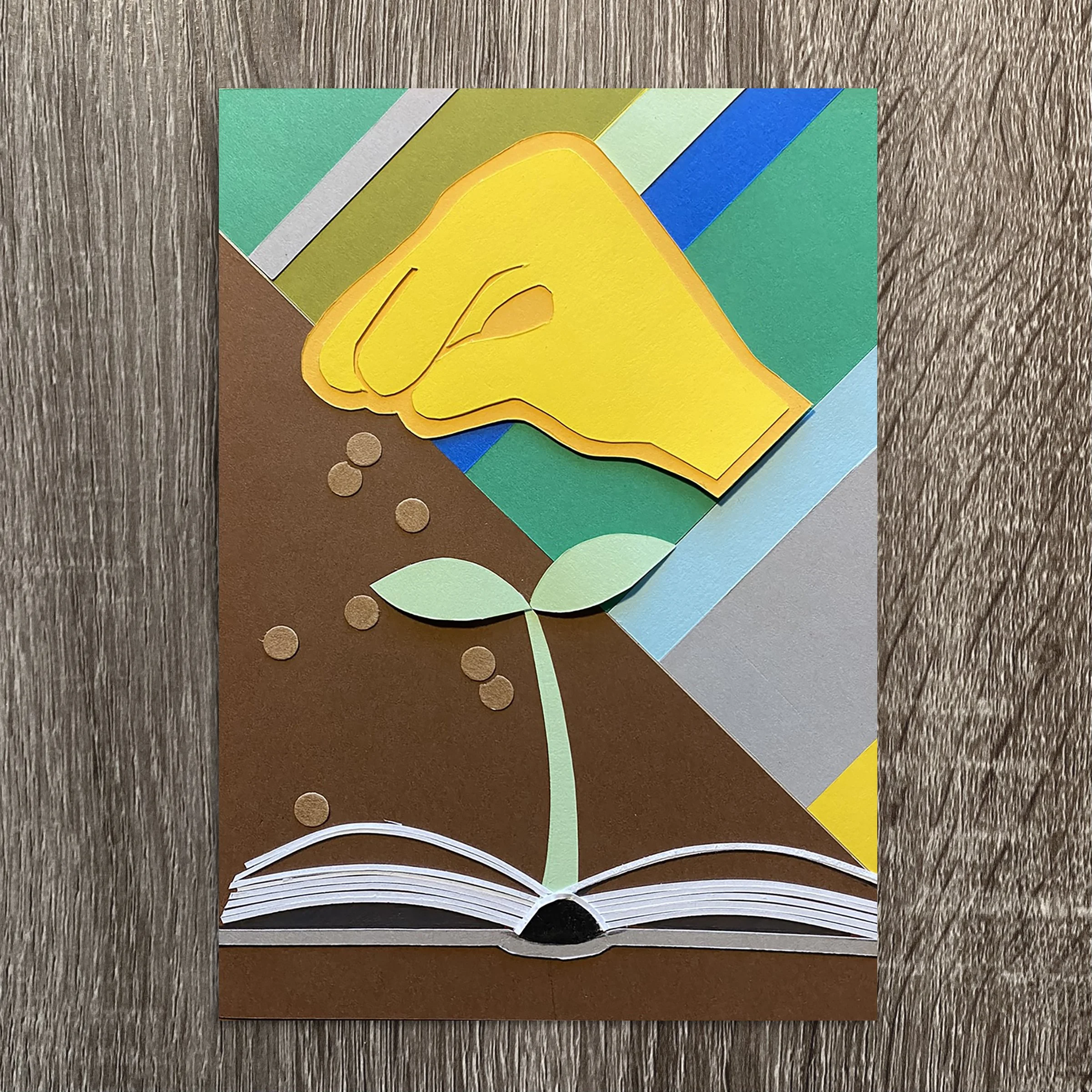
Half a century after the program was initiated, we are still learning how to help our planet regarding many environmental issues, from the policy level to our daily habits, which reminded us of one of the sustainable principles:

“Promote understanding of sustainability in ways that positively influence user behavior by interpreting on-site features and processes.” — SITES 9.1 Promote Sustainability Awareness and Education

What options can we utilize to reach this goal? We can use interactive or interpretative educational materials to narrate and illustrate projects’ approach to implementing sustainable SITES credits. An interpretive part could be a map, model, sign, or video. An interactive element could be a website, electronic kiosk, or a tour.

On this momentous day, we design this card for educational sign-makers, whether they make signs, websites, or videos. Because of their passion for teaching and creativity, so that everyone can receive arts and knowledge at the same time.

Disability Pride Matters by Admin

July is Disability Pride Month. It is celebrated worldwide, including in the United States, the United Kingdom, South Africa, and other countries across the globe.

More than three decades ago, President Reagan officially declared Proclamation 5613, which marked the first official awareness for people with disabilities. In 1990, President Bush signed the Americans with Disabilities Act into law. That same year, the first Disability Pride Day was also held in Boston to commemorate this historic moment.

These actions called people to provide understanding and support for the disabilities community. On the other hand, many of us still think people with disabilities are a minority group. In fact, according to the World Bank publication, 15% of the world’s population is identified as disabled. The percentage of the disability population is even higher in the United States. According to official estimation, up to 1 in 4 adults in the United States have some disability and would need additional support ranging from mobility to daily self-care.

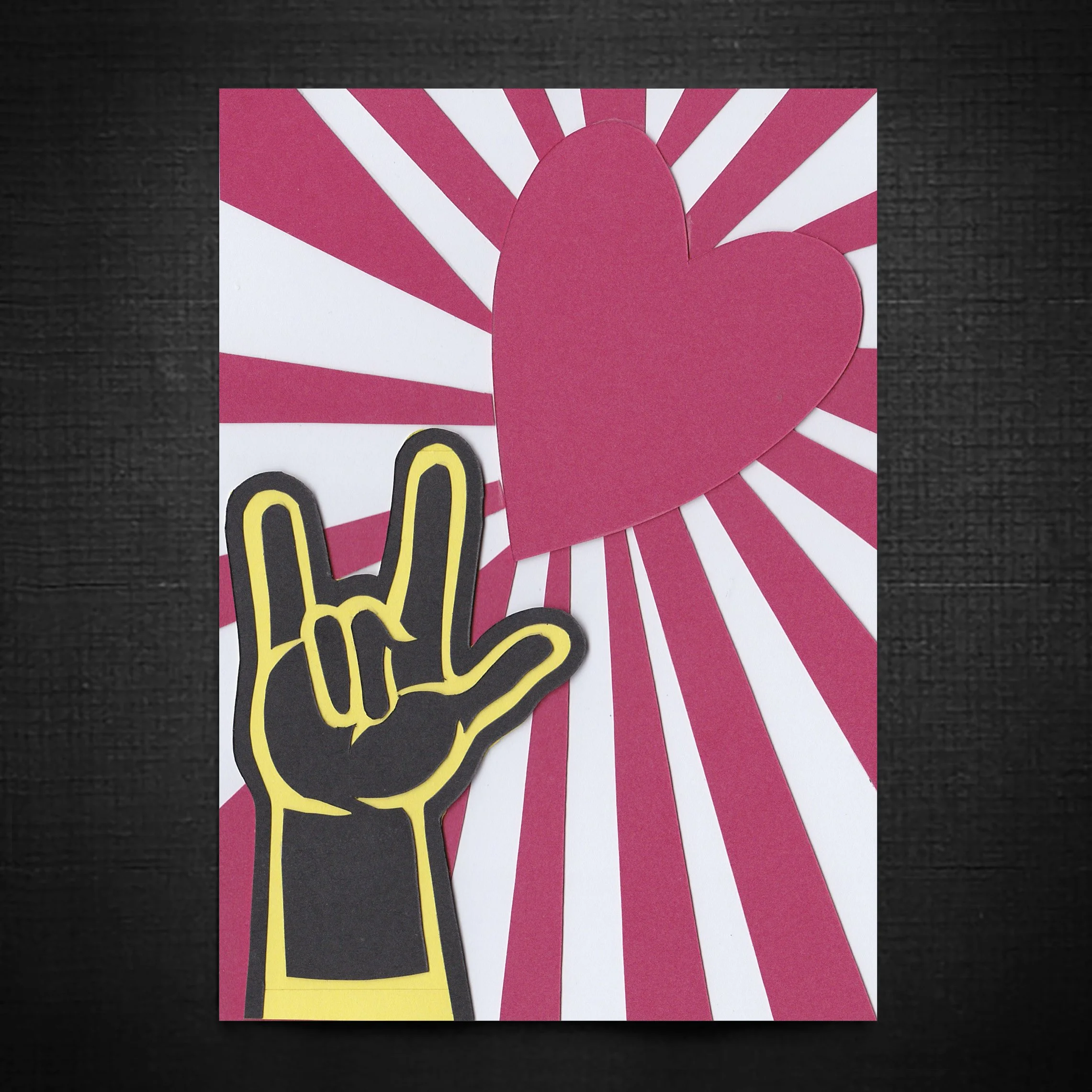
Many disabilities are not visible from the outset. That stigma-breaking identity is reflected in disability’s pride flag. The red represents the physical disability; gold means neurodivergent; white symbolizes invisible and undiagnosed; blue acts as a psychiatric disability, and green reflects sensory disability.

Reading disability’s shocking infographics and stunning flag reminded us of a WELL feature.

“..projects that provide public use spaces and community programming can encourage social interaction and cohesion, community empowerment and collective feelings of ownership, reducing community health risks like stress, depression, heart disease, stroke, and chronic disease and improving physical and mental health, happiness and healthy behaviors.” - WELL C11, Civic Engagement

Being aware of the population with a disability is one thing; embracing disability as our true self is another. We might have all gone through moments of being disabled in our life. Once we take pride in our whole selves, including all chronic or temporary disabilities, then we can understand our limitations and still love who we are.

On this historic month, we design this card for non-profit organizations, thanks to them for looking after disability community.

Park and Recreation Matters by Admin

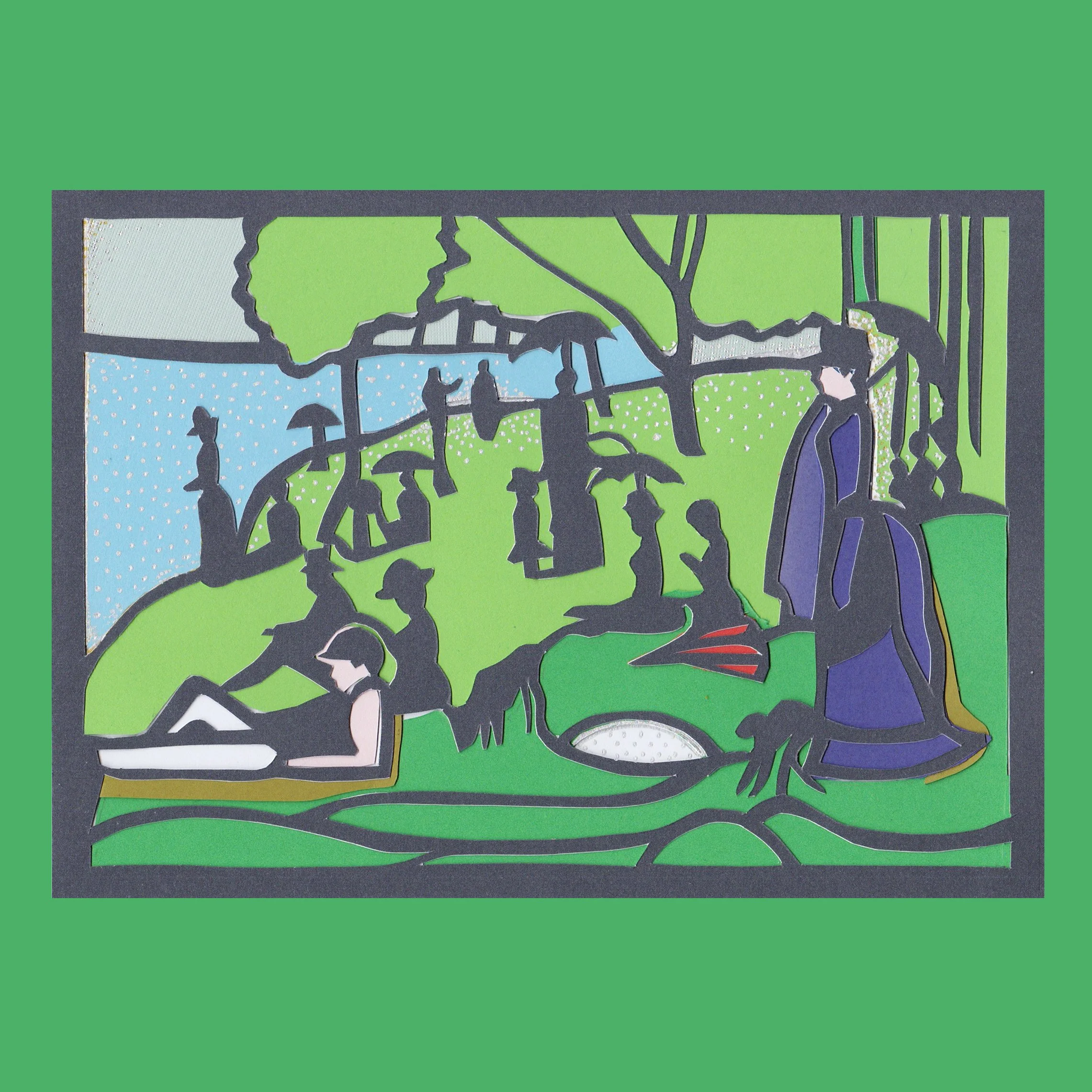
It is said that people in the United States have celebrated Park and Recreation Month since 1985.

When did the park become so essential in our urban life? If you are curious like us. Before London’s parks were first developed in the 18th century, the English landscape gardens were always seen as a private luxury. Their designs contained countless allusions tied to Greece and Rome’s symbols. Walking or riding through the picturesque landscape was considered a balanced mental activity: neither too exhausting like farming nor too dull with predictable views. Such landscape arrangement activated human curiosity, prefiguring theories later in modern psychology.

After the major cholera epidemic in England in 1832, the selected committee realized the need for recreational space. It thus urged every town to establish public parks to improve health conditions.

In 1841, Liverpool’s Birkenhead Park was funded by public money to serve the overcrowded industrial workforce. London’s Victoria Park, built in later years, did an even larger working-class population in the capital’s East End.

The New York Central Park, influenced by Paxton’s idea in Birkenhead, was built in 1858. Fedrick Olmsted and Calvert Vaux designed the park with the belief that pastoral scenery provided an antidote for urban dwellers.

“Parks are affording the most agreeable contest to the confinement bustle and monotonous street division of the city,” Fedrick Olmsted once said.

In the 1980s, researchers began providing scientific evidence that backed up Olmsted’s pastoral scenery theory. Studies by many scholars such as Kaplan and Kaplan (1989), Appleton (1975), Wiston (1984), Bourassa (1991), and Ulrich (1999) in later days all suggested that the biological basis for human preference for a particular natural environment brings us psychological benefits.

While reading about urban parks’ fascinating history, it reminded us of a WELL feature.

“At a community scale, active design considers the ways in which communities can encourage populations to be active through public infrastructure, such as cycle lanes and green space. “

— WELL V01, Active Buildings and Communities.

According to NRPA (National Recreation and Park Association), the theme of year 2025 is “Build together, Play together.” Many cities aim to bring essential services to the parks and have activities to celebrate this month. On this special month, we design this card for park lovers. Thanks to them for sharing their love of park with everyone inn the community.


Playing LEGO Matters by Admin

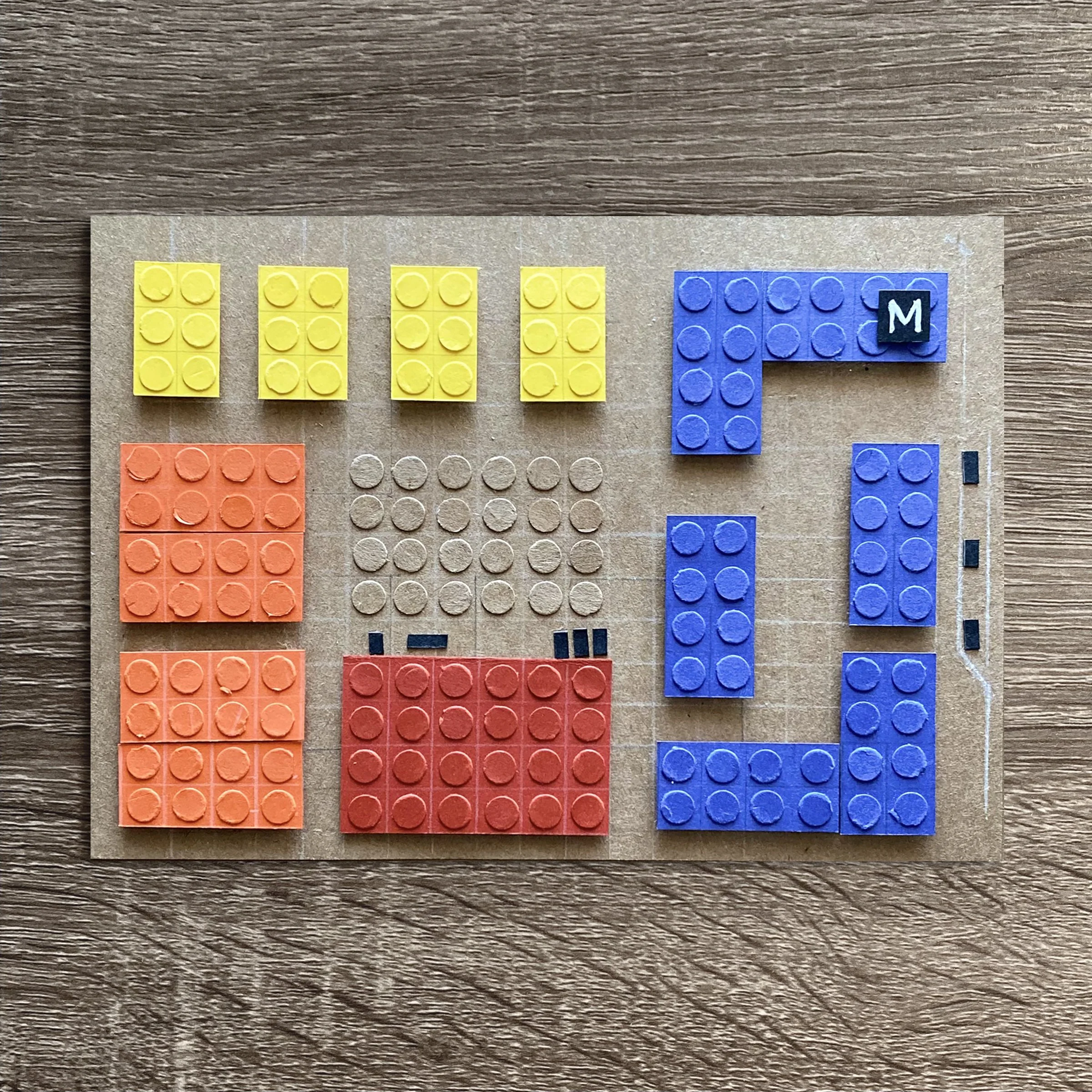
LEGO, the creative toy originally manufactured by the LEGO Group in Denmark . According to Wikipedia, “Lego” was derived from the Danish phrase “leg godt,” which means “play well.”

LEGO’s interlocking block system made their pieces easy to assemble and connect for constructing a project. Many schools have used it as part of teaching tools. So far, the most impressive way to utilize this education program we’ve seen is the UrbanPlan. UrbanPlan is an educational program initiated by ULI America (Urban Land Institute).

Similar to the video game SimCity, where the player acts as a town’s overall planner to build and manage the town’s growth. UrbanPlan is a more realistic “game” and engaging exercise for people interested in learning the fundamental forces of developing a city or a neighborhood.

When discussing building a town, we inevitably think about a green neighborhood. What is a green neighborhood? You might ask. It is a neighborhood developed in a way with sustainable practice and design. A good example is the project certified with LEED-ND.

“To encourage development within and near the existing community and public transit infrastructure…To reduce the incidence of obesity, heart disease, and hypertension by encouraging daily physical activity associated with walking and biking.” — LEED ND- Smart Location.

On this momentous day, we design the card for planners and developers. Thank them for applying the Smart Location principle, so that everyone could enjoy walkable, bikeable, and even healthier neighborhoods!

Making Music Matters by Admin

June 21st is the National Make Music Day. This day was initiated to motivate us to create our own euphonious melody.

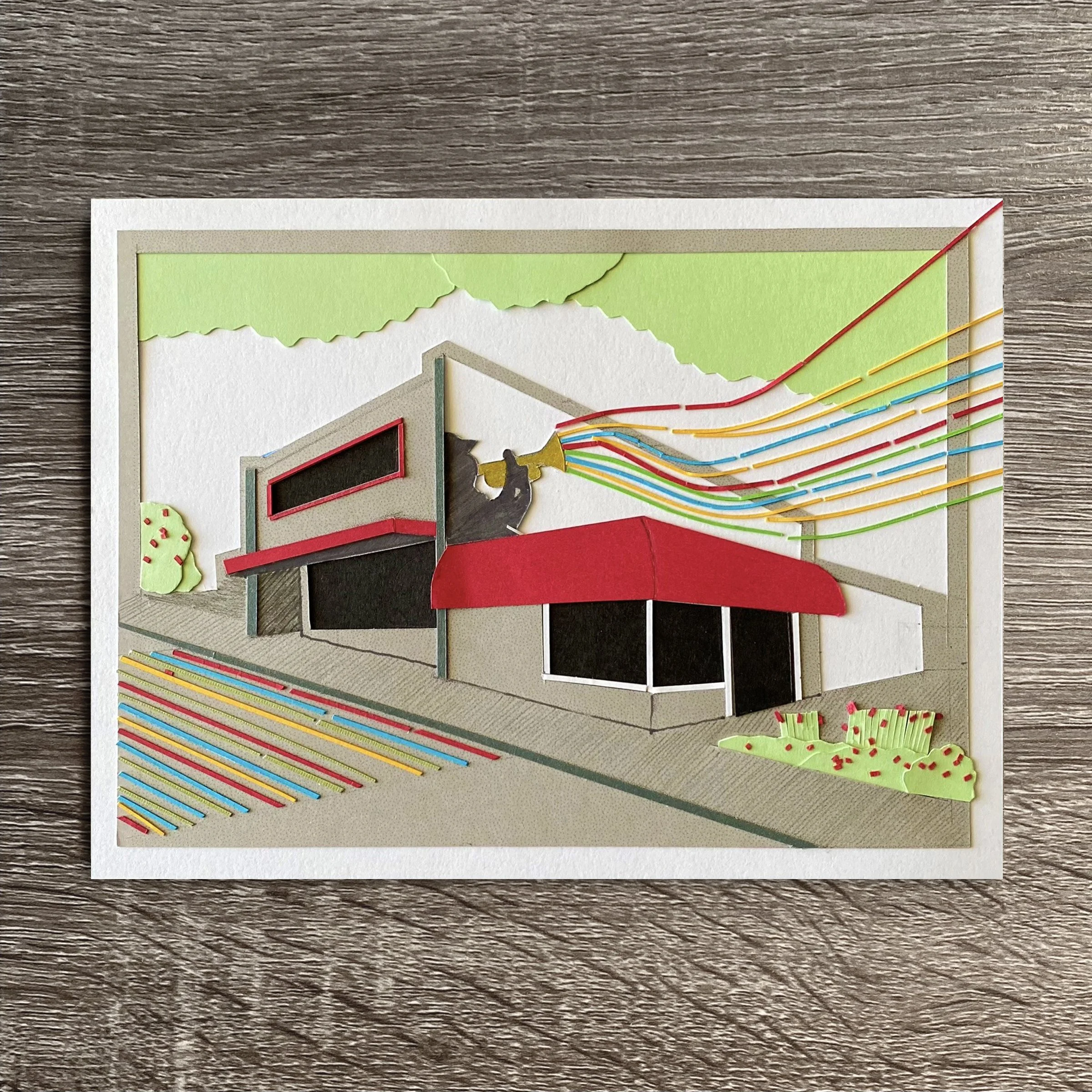
While searching for suitable music for our cards collection, we discovered a music store in the neighborhood. Within less than a quarter mile from our community metro station, Chuck Levin’s Music Center’s vibrant and eclectic facade catches our eye. The music center was first founded back in 1958. After the riots in Washington, DC, the store relocated to its current location.

A bright-red marquee across the building highlighted its uniqueness on the street; the extended canopy provides pedestrians a temporary refugee space on a rainy day. The full-height windows cover more than 60 percent of their storefront with a telling story. With its other artisan mural facing the neighbor’s property, this two-story store gave us a reason to slow down our pace. Walking on this barrier-free sidewalk has become a daily pleasure.

Chuck Levin’s visually pleasing storefront reminded us of a sustainable design principle.

“ To improve public health by providing a safe, appealing and comfortable street environment that encourages daily physical activities and avoids pedestrian injuries.” — LEED Neighborhood Development, Walkable Street.

On this momentous day, we design this card for those music lovers at Chuck Levin Music Center. Whether they are store staff, long-time customers, or instrument shoppers, we thank their support for the music center so that everyone can enjoy Levin’s unique storefront and comfortable sidewalks.

Safety Matters by Admin

Three years ago, a group wore orange shirts marching for Gun Violence Prevention in Newtown, Connecticut. Their enthusiasm reminded us that June is National Safety Month.

National Safety Month was initiated to raise awareness of many environmental safety aspects: from a trip hazards to detrimental gun violence. While government regulations and laws, such as American Disability Act, have helped prevent risks from the built environment; there are other safety issues, such as violence derived from mental illness, that might still need our attention.

According to National Alliance on Mental Illness, one in five adults in the United States experiences mental illness in a year. Less than half of them receive mental-related care. Though this seems to be such a big issue that no individual can handle, we realized WELL has developed a feasible framework for building a culture of health and establishing social ties.

“The WELL Community concept promotes the implementation of design, policy, and operations strategies that focus on addressing health disparities and promoting social diversity and inclusion.” — WELL, Community overview.

On this historic month, we design this card for enthusiastic spirits. Thanks to them for marching for safety.

Greeting Cards Matters by Admin

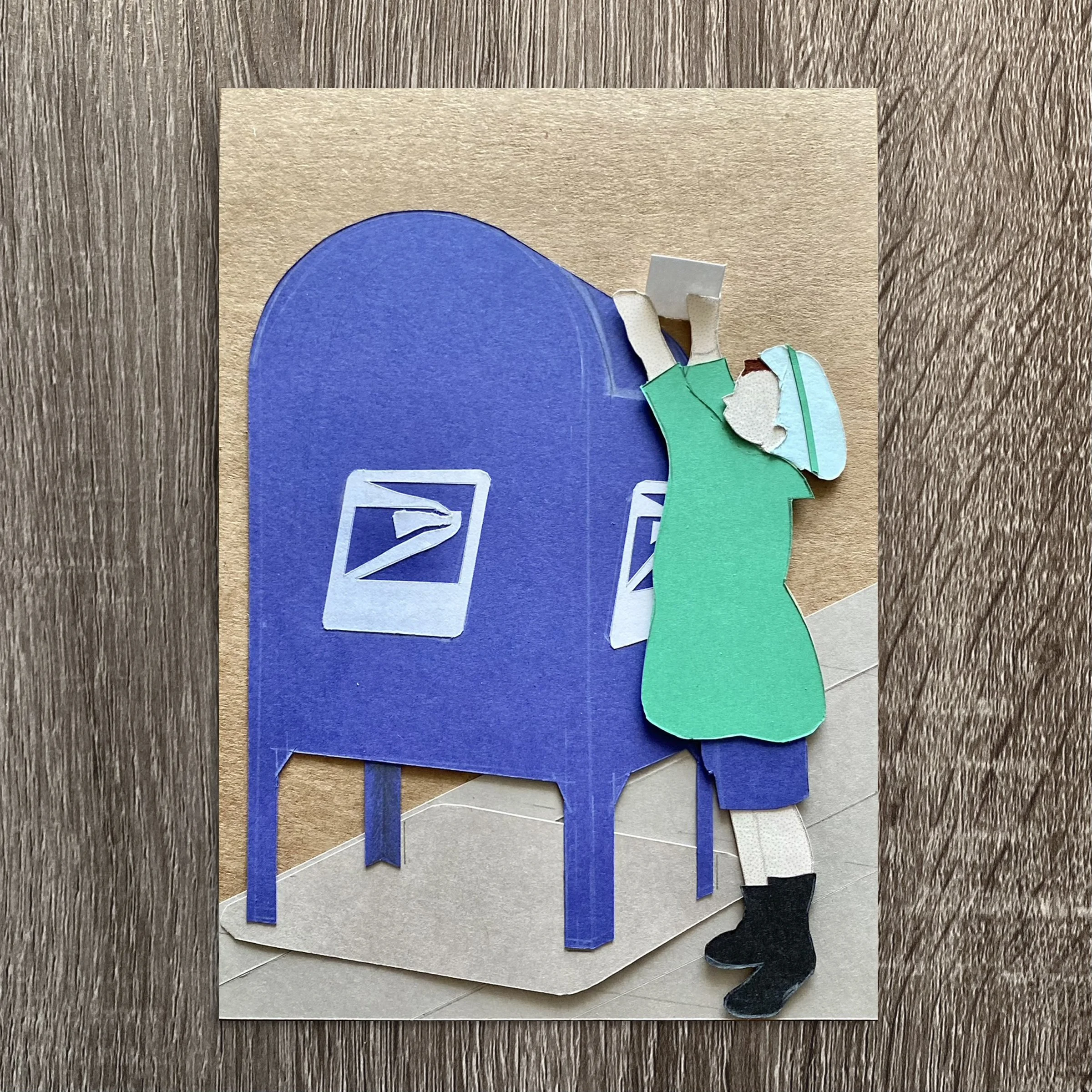
In the digital-production-flooded era, sending greeting cards to friends seem particularly meaningful.

When talking about greeting cards, we immediately thought of Joyce Hall. Joyce Hall, the founder of Hallmark, opened up the trend of sending greeting cards across America.

In 1910, Joyce Hall founded his card business in Kansas City. Moreover, he turned his attention to the decaying urban neighborhood upon his retirement. He developed the Crown Center, the 85-acre mixed-used development at the heart of Kansas City. Within only a 1/4 mile from the Kansas City Station, the Crown Center turned abandoned warehouse and empty parking spaces into a convenient and lively neighborhood. Visitors and residents can dine, shop, and find everything needed in this center.

While reading Joyce Hall’s fascinating story, a sustainable principle came to minds.

“Locate the project on a site that is in proximity to basic services so that at least one entrance to the project is within a 0.5-mile walking distance of at least seven publicly available basic services.” — SITES, Site Context 1.6 Locate Projects within Existing Developed Area

“What are the basic services?” you might ask. There are four major categories of essential services:

  • Food Retail, such as grocers or supermarkets;

  • Community-serving retail, such as hardware stores or pharmacies;

  • Service-based businesses, such as banks, salons, or cafes;

  • Civic and community facilities include schools, post offices, or libraries.

On this momentous day, we design this card for planners and developers. Thanks to them utilizing sustainable priciples, so that everyone could benefit from a convenient neighborhood.


By the way…If you like this short story, you might also like: Does Zip Code Impact Our Life Expectancy?

Tobacco Free Matters by Admin

Tobacco used to be sold in the pharmacy in the old days. Smoking cigars or cigarettes was socially appropriate and considered a way to reduce stress and anxiety.

In 1900, cigarette consumption was approximately 54 per capita annually. That number increased exponentially and peaked at 4,345 in 1963, almost equivalent to 12 cigarettes per day.

In 1930, the death rate of lung cancer was 4.9 per 100,000; in 1990, the rate increased to 75.6 per 100,000. Medical studies also found a direct link between tobacco consumption with other diseases and conditions such as heart disease, atherosclerotic peripheral vascular disease, laryngeal cancer, oral cancer, or decreased pulmonary function.

During the later part of the 20th century, the health burden from exposure to environmental tobacco smoke was also documented. With the increased health adversity from smoking tobacco, the World Health Organization (WHO) established the Tobacco-free Initiative. This WHO effort to promote global cooperation on aspects of tobacco control reminded us of a WELL feature.

“In order to prevent intrusion of cigarette smoke from the outdoors, projects must also take steps to ensure that smoking is not allowed in the vicinity of building entrance, operable windows and building air intake.” — WELL A02, Smoke Free Environment

Today, we design this card for former smokers, thanks to them for being so strong and courageous so we all can enjoy a smoke-free environment.


By the way, if you are interested in this topic, consider checking out “Tobacco Use: United States, 1900–1999” at NIH’s National Library of Medicine.

Blueberry Matters by Admin

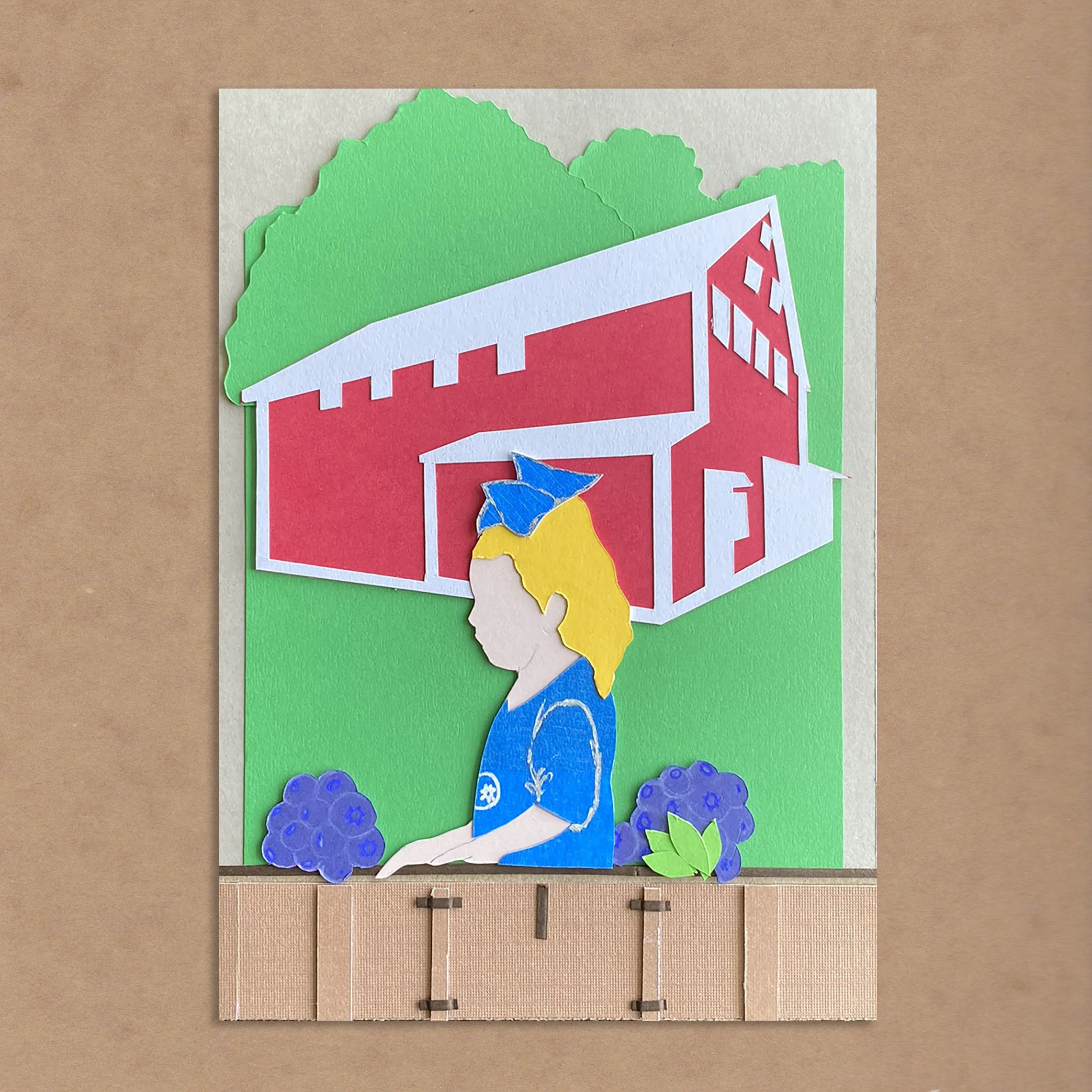
Each year in mid-July, our state has a community blueberry festival. That reminds us that July is the blueberry month. It is the best time of the year to harvest blueberries in Northern America.

Blueberries are usually grown from April to September across several colder planting zones. This tiny fruit is categorized by its height, the low bushes (about 1–2 feet) grows on planting zone 3 to 6, the half-high bushes (about 3–4 feet) grows on planting zone 3 to 5, and the high bushes (4–7 feet) grows on zone 4 to 7.

Blueberry is well known for its rich antioxidant content, which brings many health benefits to our bodies. Yet, only a few people know that the popularity of this tiny blue fruit is from a public-private partnership effort.


In the 1890s, Ms. Elizabeth Coleman White, a daughter of a New Jersey’s local cranberry farm, began interested in cultivating wild blueberry. Later in the 1900s, with the help of a USDA botanist Dr. Federico Coville, their blueberry production became successful and commercialized. During its first boom in 1942- 1962, blueberry cultivation spread across America and appeared in 13 states.

While fascinating in Ms. White’s inspiring story, blueberry’s rich micronutrient content and various blueberry festivals at nearby pick-your-own farms reminded us of a WELL feature.

“Strategies to increase fruit and vegetable consumption include behavioral interventions, such as increased availability and visibility of fruits and vegetables, pricing incentives to lower the cost of fruits and vegetables and promotion and support of community gardens and urban agriculture initiatives.” — WELL N01, Promote Fruit and Vegetable Visibility

On Blueberry Day, we design this card for those homemakers, thanks to them looking after homes and make fruits and vegetables so available at our kitchen tables.


By the way, if you are curious more about Ms. Elizabeth While, a webinar “Through Elizabeth’s Eyes” provided by Pinelands Commission will be a great resource to satisfy your big learning appetite.

Fitness Matters by Admin

wheaton community center MD

Today, the first Saturday of May, is National Fitness Day. Numerous activists have promoted fitness; one credited contributor was Kim Bielak, a life and career coach based in Los Angeles.

While it is essential to keep the fitness of our mind and body, counterintuitively, it is also critical for us to know that we are not aware of “doing exercise.”

Why?

From human instinct, it is a novel idea to go to a specific destination and only to build up our bodies. Looking back on our anthropology history, none of our hunter gathered ancestors’ activities was for “doing exercise.” Physical movements have already embeded in their daily routine. In the 19th century, Treadmills (tread wheels) was invented by William Cubitt for the Victorians to punish the prisoners, not to “benefit overall well-being.” Therefore, if we inject “movements” routines into our daily life, it minimizes our innate resistance to “work-out,” which makes “work-out” and “exercise” more available to us. When we realize that theory, walking would be the most basic form of physical exercise.

According to studies, the minimum recommended dose for exercise is 150 mins per week. If we keep this “150 mins-movement” habit, we will lose about 0.5 pounds (lb.) per month and can lose about 6 pounds if we continue this routine for one year. Also, because 30 percent of our muscle mass counts for 20 percent of metabolism; the older we are, the more benefit we can gain from exercise.

A study by Ralph Paffenbarger, a Stanford and Harvard University professor, found a correlation between exercise and mortality rate. Under the exact circumstances of doing 2000 kcal per week, the mortality rate drops 21 percent among the age group of fifty and less; the mortality rate drops 50 percent for the age group of seventy to eighty-four.

Interestedly, one of our neighborhood community center integrated the recreation and library program into one building. This brilliant gesture reminded us of a WELL design principle.

“Active design considers how different building components such as staircases can encourage movement.” — WELL V01, Active Buildings, and Communities.

Whether you are a fitness enthusiast or fitness cavalier, on National Fitness Day, we design this card for users at the Wheaton Community Centers, thanks to them share their healthy lifestyle with everyone in the community.


By the way, if you are interested in this topic, consider watching a Google talk by Dan Liberman, “Exercised- why something we never evolved.”